Graduating Student Spotlight: Madisen Kratz
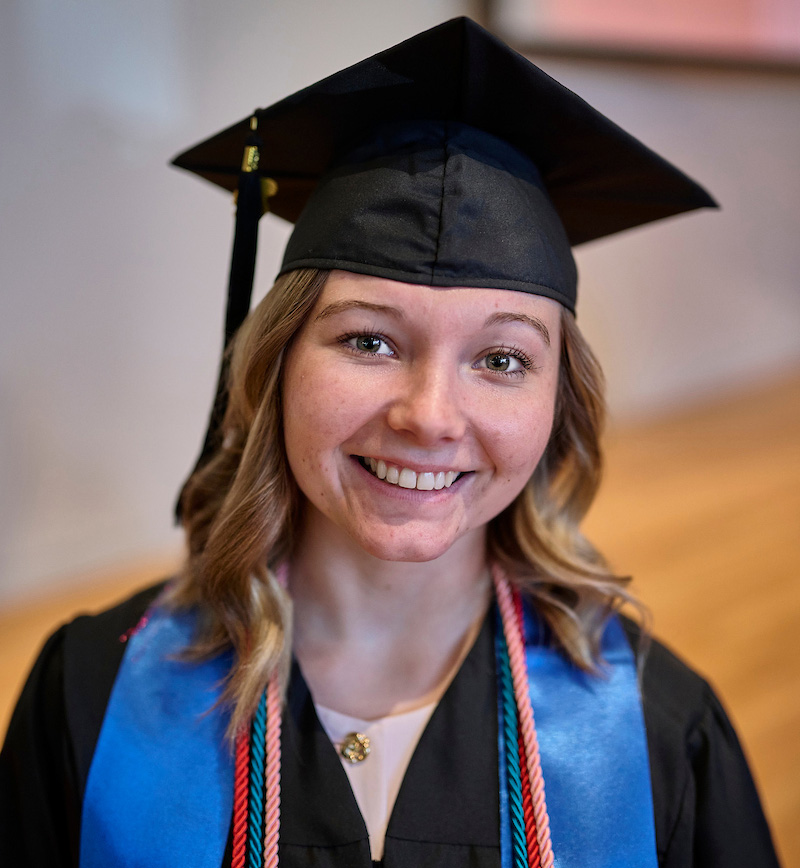
Madisen Kratz’s inspiration to become a social worker was her dad, who said his social worker saved his life when he was a young boy.
Kratz, who will receive her Master of Social Work degree from the University of Kansas School of Social Welfare in May, wants to be the kind of social worker who saves lives, too.
She leans on the stories her father told her when she was younger. Her dad and uncle were removed from their home, and full-body X-rays showed bruising covering their whole bodies. As an adult, Kratz's dad developed a substance use disorder, and she would visit him in prison growing up.
All of this led to her ultimate goal of providing therapeutic services to inmates who are incarcerated for life.
“I have seen some rough things growing up, and so I want to be able to share things that I've learned, things that I've experienced with people who are like me, or maybe people who are like my dad,” Kratz said. “They're still people, and they deserve to feel good as well. Their choices don't define who they are as people.”
Kratz grew up in South Dakota next to the Iowa border, but moved to Kansas with her boyfriend six years ago. She got her bachelor’s degree from Kansas Wesleyan before she was recommended for the MSW program at KU.
Now on the advanced track in KU’s MSW program in Salina, Kratz is also one of 12 students in the 2025-2026 cohort of the Integrated Health Scholars Program (IHSP). IHSP helps provide more social work professionals who bring high-quality integrated health services to rural areas throughout Kansas.
Through IHSP, Kratz and her cohort travel around to different community mental health centers in the area. As part of the program, Kratz is developing a diagram about how trauma affects each part of the brain. That was a core reason she became interested in social work – to help rehabilitate inmates.
“I think it's really important to help that recidivism rate, to heal these traumas and heal the things that are causing these actions to happen,” Kratz said. “By expecting them to rehabilitate on their own, with no one there to encourage them and help them.”
Kratz is already working toward that goal in her practicum with the Central Kansas Mental Health Center in Salina, as well. Every Wednesday, she goes to the county jail with a crisis clinician to chat with inmates who request mental health services.
She admits it isn’t easy. There are moments that feel defeating. But it’s worth it to become a social worker who can help save lives.
“For something to be traumatic, it doesn't have to be traumatic to you,” Kratz said. “If it's traumatic to them, it's traumatic, and it happened, and it changed their life.”