Seminar to prevent sexual violence on campus earns national recognition

An academic seminar designed to prevent sexual violence on the University of Kansas campus earned national recognition for collaboration and innovation.
The Prevention is Possible Seminar received a 2025 Innovative Program Award at the National Association of Student Affairs Professionals (NASPA) Region IV-West Conference this fall. The seminar course is a partnership between the KU Sexual Assault Prevention & Education Center (SAPEC) and the KU School of Social Welfare.
Since Prevention is Possible began in 2018, more than 7,000 KU students have completed the course. The School of Social Welfare is the academic home for the seminar, SAPEC coordinates class sections, and KU student organizations have committed to offering training to their members.
Kelsey Hunter, assistant director of SAPEC and a KU Master of Social Work graduate, said the partnership is built to create community-based change.
“This partnership is the only one of its kind that we know of in the country – the School of Social Welfare and SAPEC working together in this way,” Hunter said.
“There are other sexual violence prevention courses, but this model of partnership and the way we’ve been able to bring so many students into the course is groundbreaking in this field,” she said.
Partnering for prevention
The Prevention is Possible Seminar is currently required for new fraternity and sorority members of the KU Interfraternity Council and KU Panhellenic Association, and previously included a formal partnership with Kansas Athletics. Partnerships with student organizations have been part of Prevention is Possible since the seminar started, Hunter said.
“The fact that students are committing to this so that they can create greater connection and greater safety within their organizations makes complete sense for a social work class,” Hunter said.
In addition to coordinating Prevention is Possible, SAPEC leads the Jayhawks Give a Flock bystander intervention training during Hawk Week, manages online training, hosts events for Sexual Assault Awareness Month, and offers presentations to KU organizations.
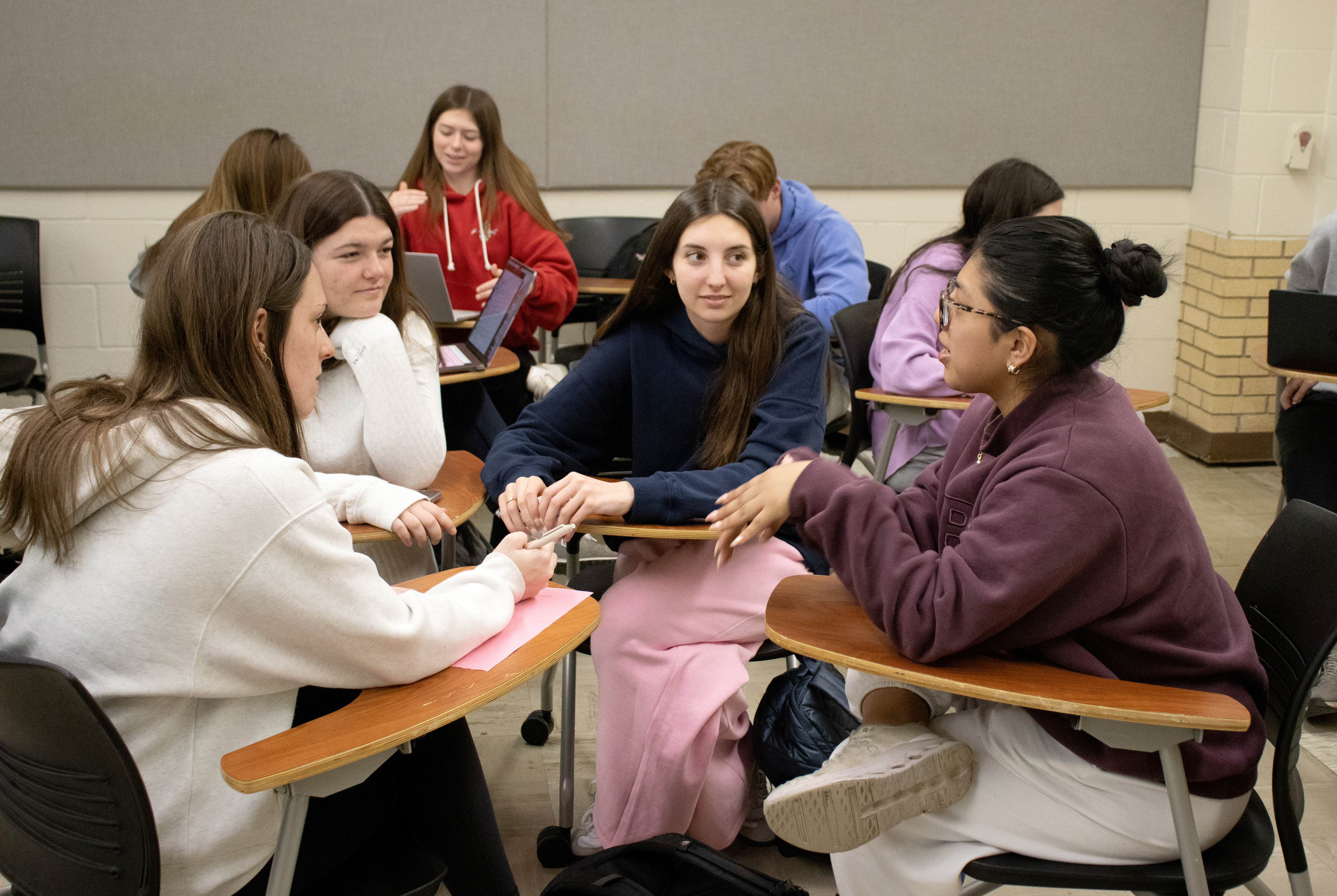
Prevention is Possible includes 16 hours of prevention education over an eight-week course. The concentrated classroom time and comprehensive instruction are more effective than one-time programs, according to a program brief from SAPEC. The seminar works together with other prevention efforts from SAPEC and campus organizations.
“Research really shows that having a higher dosage of prevention education is more effective in shifting attitudes and beliefs in a positive way,” Hunter said.
In 2024-2025, over 1,450 KU students – including more than 20% of the fall 2024 freshman class – enrolled in 60 sections of the one-credit seminar.
“We know that in order to see community-level change, we don’t have to reach absolutely everyone,” Hunter said. “If we reach enough people in the community, we reach a tipping point where we’re able to see positive impacts for the entire campus.”
Collaborating across campus
Hunter worked with Juliana Carlson, associate professor and director of the Bachelor of Social Work program at the KU School of Welfare, to develop SW 365: Preventing Sexual Violence – From Campus to the Community.
The expanded, three-credit course includes research and more in-depth discussion. Hunter taught the course for the first time in fall 2025. SW 301 and SW 365 are available as elective courses for all KU undergraduate students.
Carlson is also a co-principal investigator for the Prevention is Possible Study. The five-year longitudinal research study follows two cohorts of first-year KU students, and uses annual online surveys to better understand the impact of sexual violence prevention at KU.
The NASPA Innovative Program Award considers several factors – collaboration, cost-effectiveness, evidence of effectiveness, variety of participants, and addressing a demonstrated need on campus.
Hunter sees one of the award criteria – if the program can be used at other schools – as a future goal for the Prevention is Possible Seminar.
“I would love to see other institutions implement this model,” Hunter said. “I think there are a lot of ways that this could be applied not only to other universities like KU, but also at smaller institutions.”
