Practicum Spotlight: Callie Nichols
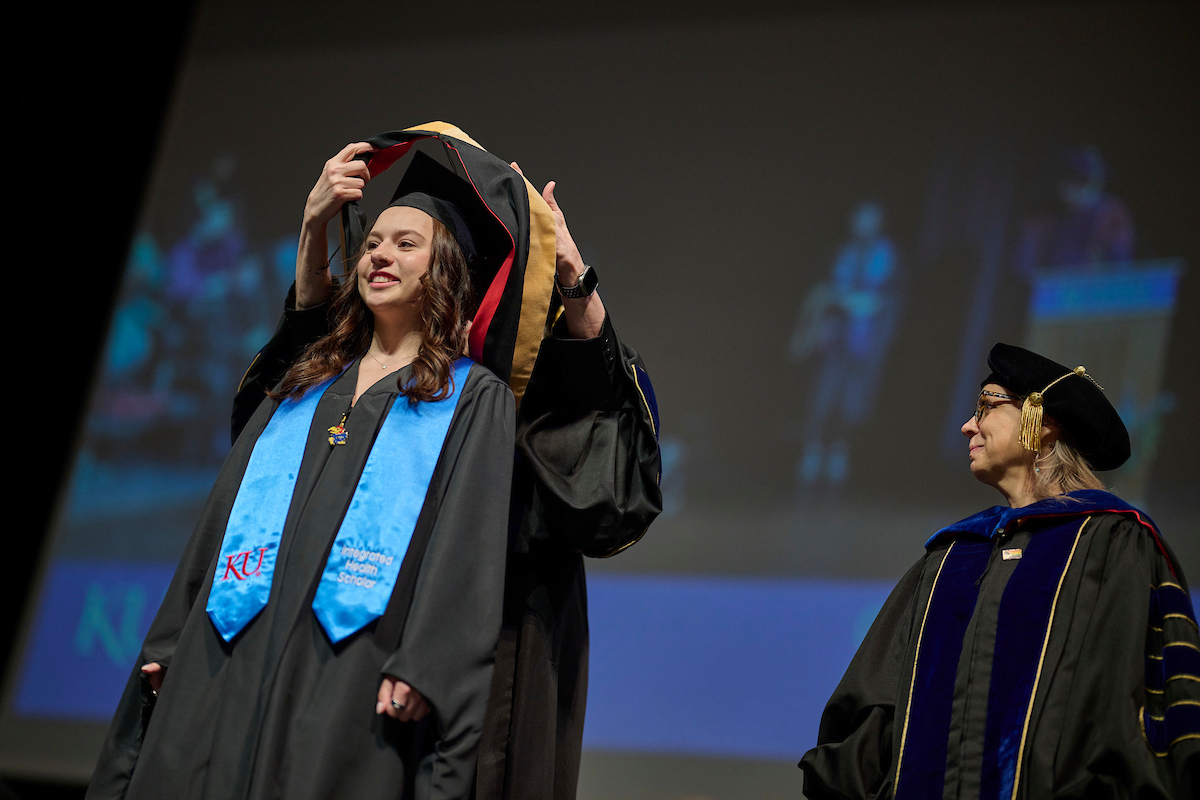
Callie Nichols got her first taste of social work during her final year as an undergraduate student majoring in psychology. The introductory class stood out because it required volunteering opportunities, and Nichols made the most of that experience.
That got Nichols thinking: should she go into social work? The options for career paths seemed unlimited and the ability to jump into practice quickly was appealing.
Two years later, Nichols graduated from the University of Kansas School of Social Welfare’s master’s degree program. It was exactly as she hoped it would be. A helping profession that would open more doors, rather than limiting her career path.
“I chose to go into social work because I loved their approach of the holistic mindset, looking at the person and the environment,” said Nichols, who was also part of the Integrated Health Scholars Program. “I also loved that I would be practicing with people in two years.”
Nichols embraced the flexibility of the social work program through her practicum placement. Her first year in the MSW program was spent at an elementary school for her practicum. While she enjoyed the experience, that setting wasn’t exactly her calling.
Her second-year practicum was at KU Medical Center with the Multi-Visit Patient (MVP) Program. There, she shadowed experts and interacted with nurses, doctors and dieticians to broaden her scope of what social workers look for in patients and clients.
“Working with different professionals has been really valuable,” Nichols said. “I feel like in any social work setting, you're probably going to be on some sort of collaborative team, whether that be with other social workers or other professionals.”
The practicum education portion of her time with Social Welfare was just one element that helped Nichols feel a sense of belonging.
While she considered herself late to the social work party, her professors and cohort welcomed her early. Adjunct instructor Sara Rust Martin’s engagement and assessment class helped Nichols find her place, she said.
“Having that community really helps me feel connected, not only to the program, but also just going out into the world after this, I feel like I'm very connected,” Nichols said. “I feel supported by the school.”