Faculty Research Spotlight: Kathryn Berringer
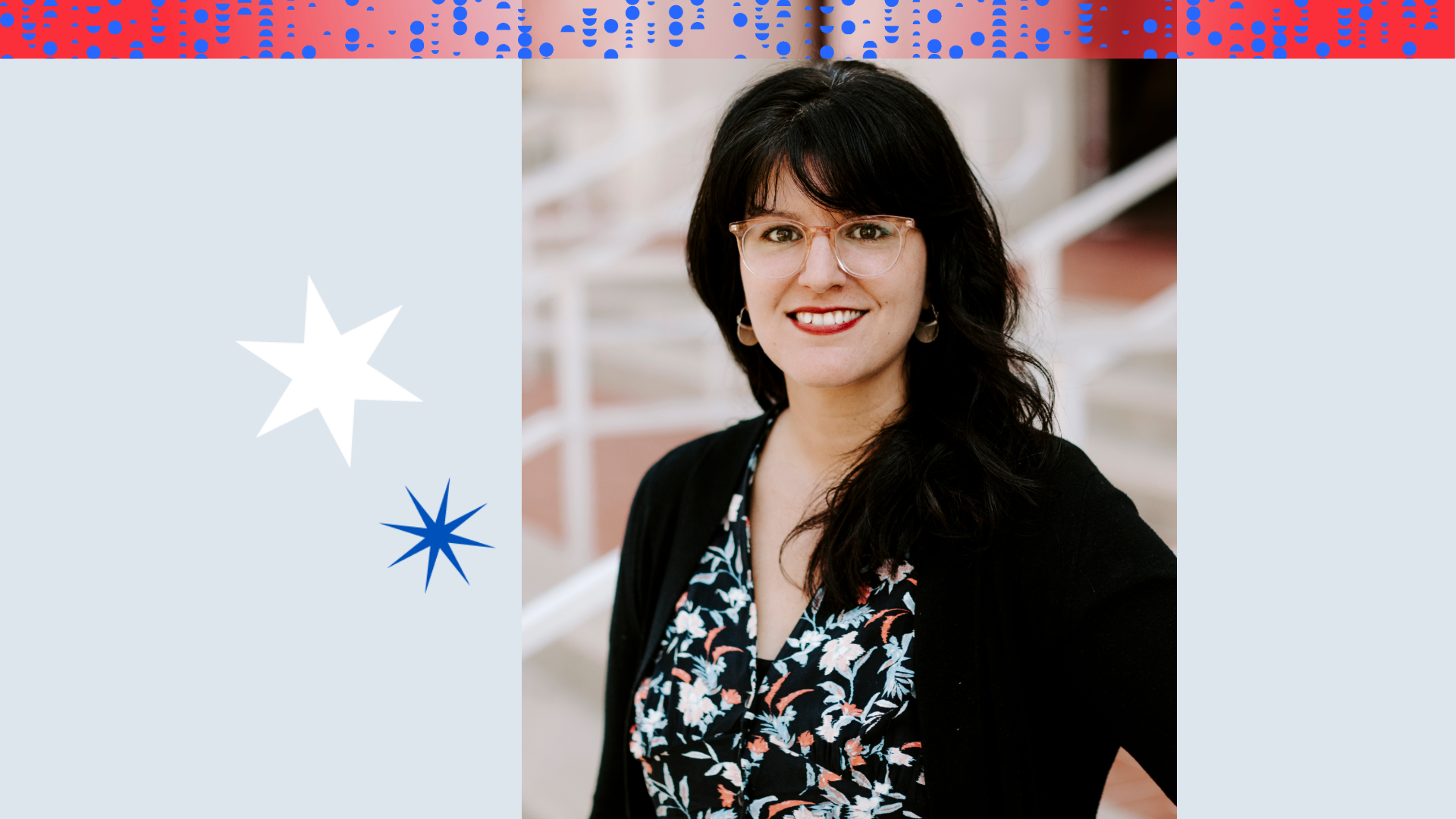
It is important to Kathryn Berringer that LGBTQ history isn’t erased. She keeps artifacts and books detailing these histories in her office, and works with youth leaders and community elders in Michigan to preserve historical archives.
Berringer, an assistant professor at the KU School of Social Welfare, dedicates her research to exploring the relationships, paradoxes, and tensions inherent to the LGBTQ movement in the United States. This research interest was sparked in her childhood, going to elementary school in Greenwich Village in New York City. She was interested in the gay liberation movement as it happened around her and, later, in the social movement’s intersections with social work.
At the School of Social Welfare, Berringer feels enabled to continue this project.
“I think that this is a really unique place that really values community engagement and community partnerships in ways that a lot of places kind of talk about or pay lip service to,” Berringer said. “But I think I found here, especially among faculty, that it's really materially valued.”
Berringer’s first practice experience was in Washington, D.C., as an AmeriCorps member at a women’s reentry organization doing HIV services. She worked with women who were currently and formerly incarcerated, and gained interest in the relationship between research, activism and medical service.
That interest blossomed into a focus on the relationship between social work and grassroots community advocacy – those tensions can be difficult to navigate. Berringer dug more into that area of her studies when getting her Ph.D. in social work and anthropology at the University of Michigan. Over the past eight years, Berringer has partnered with activists and practitioners at an LGBTQ+ youth center in Detroit.
An idea that stands out from the last half-decade is the often-fraught prospect of producing "safe spaces."
“It was really at the center of everything that they were doing, of all the care they were providing,” Berringer said. “But it was constantly something that they were unsure how to define, how to measure, how to know that is – how to confirm that a space is experienced as safe.”
Berringer, who teaches SW 635 and SW 975 this semester, asks the question in her research: How do you move forward, navigating how to provide the best possible care, in the context of uncertainty?
A safe space can be a place where people feel seen and heard, but heightened visibility also entails threats to safety, increased surveillance and targeting. Berringer looks to sites like libraries and community gardens as safe spaces that embody the environmental aspects of social work.
Berringer is interested in these safe spaces as sites where the intersection of social movements and political social work meets.
“I've been thinking a lot about how to produce these places and spaces. I think in social work, we think a lot about interpersonal interventions,” Berringer said. “Social work is happening between two people, but I think it really often happens in these places that are produced as sites of care, of safety, of belonging, and so much of that is really environmental.”
Berringer looks forward to future community engagement and partnership in her studies as she continues her research at the School of Social Welfare.